The Ultimate Ethics Guide for Enrolled Agents: Understanding IRS Circular 230 in 2025
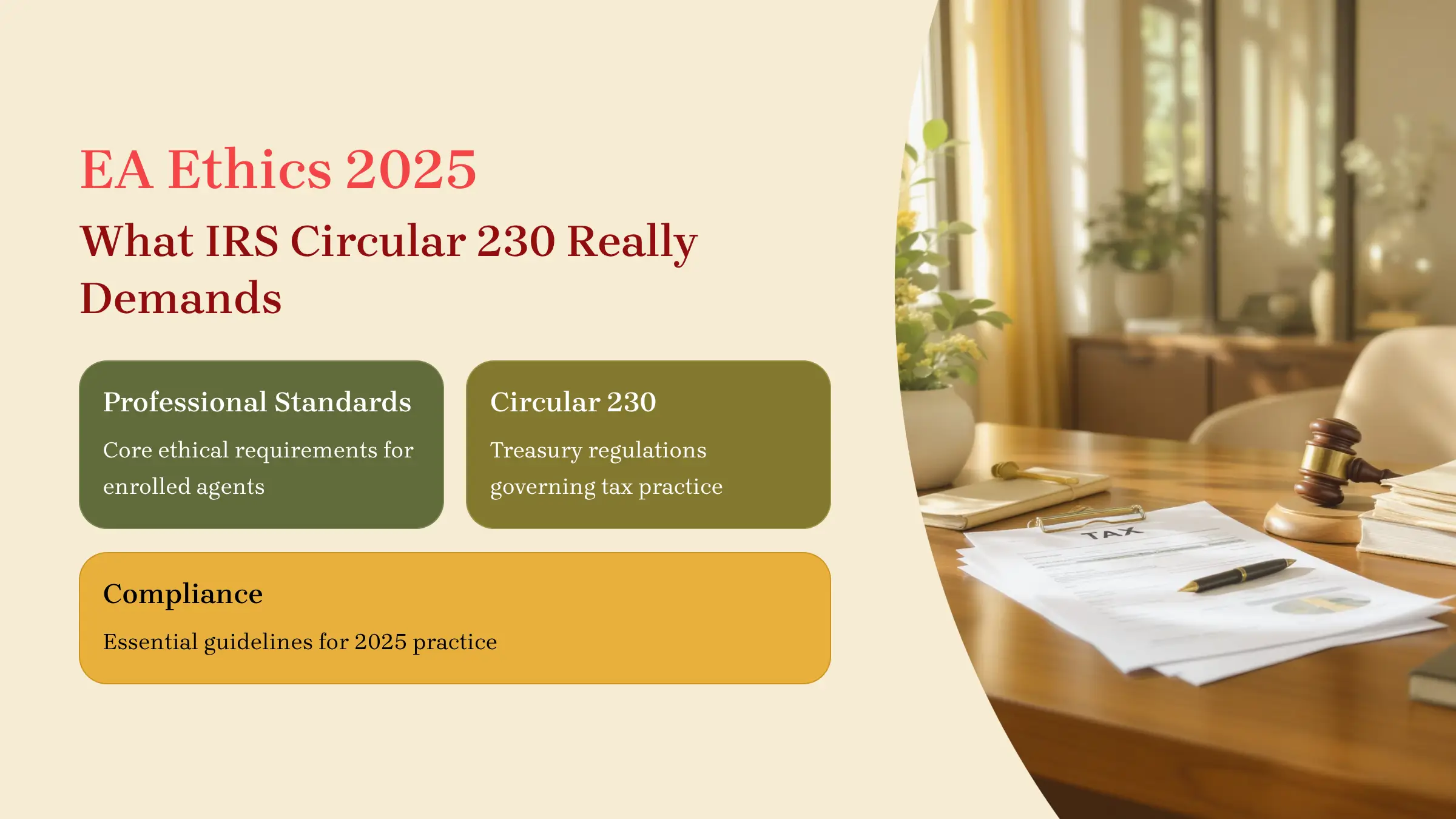
Behind every trusted tax professional stands integrity — and for Enrolled Agents, that integrity is defined by IRS Circular 230.
This regulation governs how EAs, CPAs, and attorneys practice before the Internal Revenue Service, setting the ethical and professional standards that protect taxpayers and the tax system itself.
Whether you’re newly enrolled or a seasoned professional, mastering Circular 230 isn’t just compliance — it’s your blueprint for credibility and long-term success.
1️⃣ What Is IRS Circular 230?
2️⃣ The Key Ethical Rules Every EA Should Know
3️⃣ Common Violations and Real-World Lessons
4️⃣ Building a Trust-Based EA Practice
5️⃣ Final Thoughts and Resources
1️⃣ What Is IRS Circular 230?
Circular 230 is issued by the U.S. Department of the Treasury and outlines the rules for professionals who represent taxpayers before the IRS — including
Enrolled Agents (EAs), Certified Public Accountants (CPAs), and attorneys.
In essence, it’s the IRS’s code of ethics.
It defines what ethical behavior looks like in tax practice, what actions violate those ethics, and how the IRS can discipline professionals who step out of line.
The modern version of Circular 230 emerged as part of the IRS’s broader effort to improve accountability in the tax preparation industry.
Since 2011, all paid tax preparers have been required to obtain a Preparer Tax Identification Number (PTIN).
Circular 230 now serves as the governing framework for anyone who gives tax advice or represents taxpayers before the IRS.
Its purpose goes far beyond compliance. The regulation is meant to restore public confidence in the tax profession — to ensure that taxpayers can trust their advisors to act
with honesty, competence, and fairness.
When you practice under Circular 230, you don’t just represent your client; you also represent the integrity of the entire tax system.
2️⃣ The Key Ethical Rules Every EA Should Know
Circular 230 is detailed, but several core principles define ethical EA practice. Let’s look at the most important sections and how they apply in real-world situations.
- §10.21 – Knowledge of Client’s Error:
If you know your client made a mistake or violated tax law, you must promptly notify them and explain the potential consequences.
Silence is never an ethical option — transparency is. - §10.22 – Due Diligence:
You are required to exercise due diligence when preparing tax returns or providing advice.
This means verifying facts, ensuring accuracy, and questioning anything that seems inconsistent or incomplete. - §10.27 – Fees:
Charging unconscionable or contingent fees (fees based on refund size or outcome) for IRS matters is prohibited.
The only exceptions apply to specific refund claims or court proceedings. - §10.29 – Conflicts of Interest:
You may not represent clients with conflicting interests unless all parties give informed written consent after full disclosure. - §10.34 – Standards for Returns and Documents:
You can’t sign or prepare any return that you know (or should know) includes an unreasonable or unfounded position.
You must inform your client about potential penalties and how to avoid them. - §10.35 – Competence:
Competent practice requires the right level of skill and preparation.
It’s okay to consult experts — what matters is that you provide accurate, well-researched advice.
If a client hands you records that seem inconsistent, don’t ignore them.
Ask questions, document your inquiries, and make it clear that you are relying on information provided in good faith.
This protects both your client and your professional reputation.
3️⃣ Common Violations and Real-World Lessons
Circular 230 isn’t just theoretical. The IRS Office of Professional Responsibility (OPR) routinely disciplines practitioners for violations — some minor, others career-ending.
Let’s explore three real-world style examples that illustrate what can go wrong.
📍 Case 1 – The Delayed Audit:
An EA intentionally delayed an IRS audit, hoping the assigned agent would retire and a new one might be “easier.”
This violates §10.23 — you cannot intentionally delay or impede IRS proceedings.
The result: formal censure and suspension.
📍 Case 2 – The Refund Check Shortcut:
A practitioner deposited a client’s refund check into their own account, deducting the service fee first.
This breaches §10.31, which forbids endorsing or negotiating government checks issued to clients.
📍 Case 3 – The “Creative Deduction” Advice:
A CPA advised clients to claim California income as foreign income under Form 2555 — a blatant misuse of the form.
The IRS determined this violated due diligence and competence standards, leading to permanent disbarment from IRS practice.
These aren’t isolated events.
OPR publishes disciplinary actions every quarter in the Internal Revenue Bulletin.
Reading them can be a humbling reminder that every small ethical lapse can have serious professional consequences.
4️⃣ Building a Trust-Based EA Practice
Ethics isn’t just about avoiding punishment — it’s about building long-term credibility.
Circular 230 provides a foundation, but the most successful EAs go further. They turn compliance into confidence.
Here are four ways to do that:
- Be proactive with transparency.
Inform clients in writing if you discover errors or omissions, and document your communications.
Clients trust honesty more than perfection. - Maintain strong recordkeeping.
Return client records promptly when requested — even during fee disputes.
Keep copies for your files, but never hold their compliance hostage. - Separate business from trust funds.
Never commingle client payments, retainers, or refunds with personal or firm accounts. - Invest in ethics education.
The tax code evolves every year. Taking an annual NAEA Ethics CPE course keeps you current and demonstrates your commitment to professional standards.
Remember, clients often can’t judge technical accuracy, but they always sense integrity.
One transparent conversation about ethics can strengthen a client relationship more than any refund ever could.
5️⃣ Circular 230 Beyond Compliance: The Human Side
Circular 230 may read like legal text, but it carries a human message:
you are entrusted with someone’s financial truth.
The IRS expects EAs to act not only as representatives but as stewards of fairness in the tax system.
Every ethical decision — whether to disclose an error, refuse a questionable deduction, or correct a misunderstanding — reflects your professional identity.
Practicing ethically often means making uncomfortable choices: declining a lucrative client, admitting a past oversight, or reporting potential fraud.
Yet these are the very decisions that define the credibility of an Enrolled Agent.
When you sign a tax return, you’re not just filling out a form — you’re certifying truth under penalty of law.
Circular 230 reminds every EA that professionalism begins where convenience ends.
The reward for integrity isn’t just avoiding sanctions — it’s earning a career built on trust, referrals, and respect from both clients and peers.
In a tax world increasingly dominated by automation, your ethical judgment is what sets you apart.
6️⃣ Final Thoughts and Resources
Circular 230 is not a one-time read — it’s a living document.
Every EA should revisit it regularly, especially after IRS updates or disciplinary announcements.
A deep understanding of these standards doesn’t just protect your license; it strengthens the reputation of the entire profession.
👉 Explore the full regulation here:
IRS Circular 230 – Full Text (IRS.gov PDF)
and learn more from the
IRS Office of Professional Responsibility
.
⚖️ Disclaimer: This article provides general information for educational purposes only and should not be considered tax or legal advice.
For specific guidance, consult a qualified Enrolled Agent or tax attorney.
핑백: 2025-small-business-tax-savings-qbi-rd
핑백: Understanding IRS Criminal Investigations and Tax Scams in 2025
핑백: EA Ethics Guide 2025
핑백: Beat the April 15 Crunch
핑백: 2025 Tip Income, Up to $25,000 Deduction